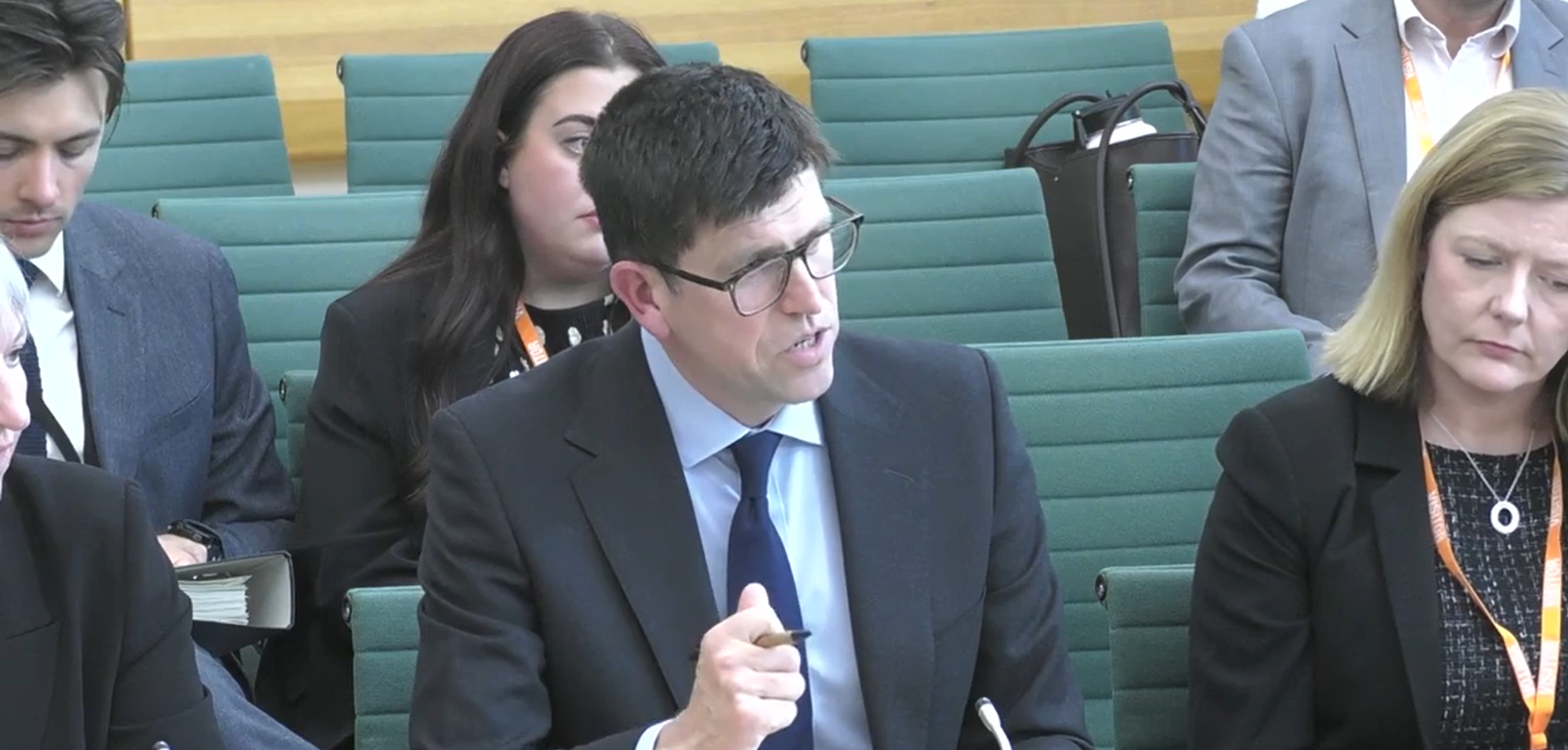
Yesterday afternoon (18 May), MPs quizzed senior officials from the UK’s tax authority about how they are making the biggest multinational companies pay their due taxes. They raised TaxWatch’s research multiple times, and HMRC provided some important new facts – but many of their answers beg new questions.
HMRC also confirmed TaxWatch’s findings that it simply doesn’t know some key facts about its own tax enforcement efforts: including, astonishingly, how many large businesses it is investigating for tax fraud or other serious and deliberate tax non-compliance.
Not too hot, not too cold
Big businesses’ tax compliance is often seen as a ‘goldilocks’ success story for the UK tax authority. It’s a resource-intensive charm offensive that seems to sit in a rare sweet spot: generating impressive sums of extra tax revenues while keeping these corporate giants overwhelmingly happy with their treatment by HMRC.
Depending on how you measure it, HMRC generates between £58 and £95 of extra tax, interest and penalties for every £1 spent on getting big businesses to pay what HMRC believes they owe. Meanwhile 82 percent of big businesses rated their overall experience of dealing with HMRC as good in 2024, compared to 68 percent of small businesses and just 52 percent of individual taxpayers.
This is testament, the National Audit Office (NAO) said earlier this year, to the individualised ‘cooperative compliance’ model. In contrast to how HMRC deals with other taxpayer groups, each member of this elite cohort of the 2,000 largest corporate taxpayers gets a dedicated HMRC Customer Compliance Manager, who works with the company long-term to identify and address ‘tax risks’ together.
It’s heavy on carrots, light on sticks, and expensive in staff time and expertise. Given the huge amounts of tax at stake for a single multinational, the NAO argues it’s money well spent, and wants HMRC to consider expanding this approach to other big fish – very wealthy individuals, and the largest ‘medium-sized’ businesses.
Unanswered questions
But there are two other key questions beyond value for money. Are the biggest businesses paying the right tax? And what happens if they don’t play ball with ‘cooperative compliance’?
After all, if it costs HMRC £1 million to get a multinational company to pay £60 million of the tax it owes but hasn’t paid, that’s great value for money – but if the company actually owes £120 million of unpaid tax, and the remaining £60 million is never collected, then most ordinary taxpayers would say that something’s still going badly wrong.
These are the questions that TaxWatch raised in evidence to Parliament’s Public Accounts Committee as they consider the NAO’s report and whether large businesses are paying the right tax.
We’ve long been concerned that where some large businesses are concerned, everything may not be going as well as the value-for-money statistics and the glowing customer reviews suggest.
And we weren’t reassured by what we found in our new deep-dive into what is possibly HMRC’s biggest corporate tax dispute, with the oil and commodities trading giant Glencore.
Way back in 2011, HMRC first questioned this company’s multi-million pound tax-deductible payments to Switzerland, arguing that they are unevidenced and therefore value-less, an assessment that Glencore strongly denies. We found that fifteen years later, with £1.5 billion of tax at stake and rising, Glencore’s giant tax bill is still unsettled, and the payments to Switzerland are still continuing.
Ordinary individuals and small businesses receiving inquiries and demands from HMRC may well ask how that’s possible. Lloyd Hatton MP asked HMRC’s chief executive yesterday about TaxWatch’s report on Glencore, and also referenced our reporting on a previous $1.1 billion dispute with GE. Perhaps understandably, HMRC officials felt unable to comment on these specific cases. (Though their obligation of omerta isn’t perhaps as unequivocal as HMRC’s Chief Executive JP Marks suggested yesterday, when he declined even to disclose information privately to MPs. Previously, for instance, HMRC released information publicly to the Committee about its tax settlement with Google, with the company’s agreement. The Committee has also taken evidence from companies themselves whose tax affairs are under scrutiny).
Powers and penalties gathering dust
Beyond these specific cases, though, MPs repeatedly echoed TaxWatch’s findings that key powers and penalties against business non-compliance remain unused – in some cases years since they were introduced.
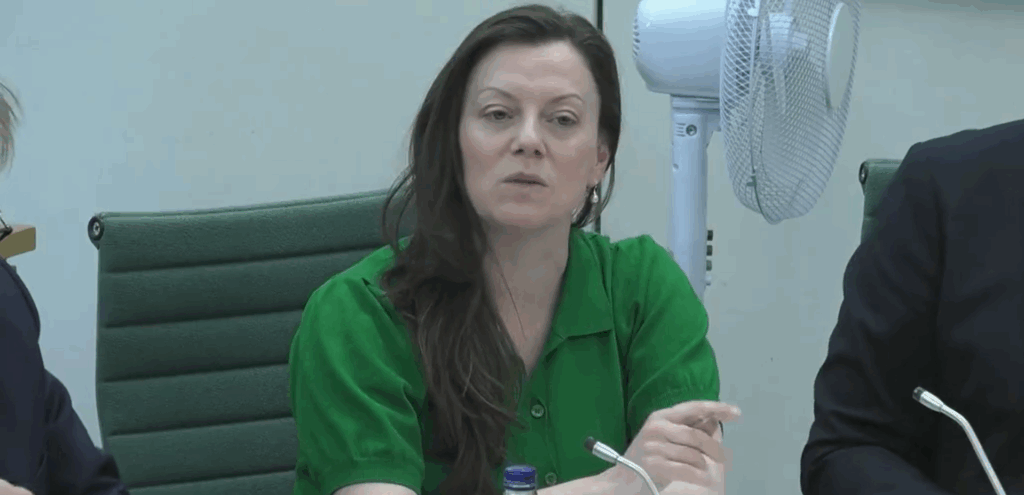
Sarah Green MP asked why, as TaxWatch’s evidence revealed, ‘special measures’ penalties and naming/shaming for ‘persistently unco-operative large businesses’ have never been used, a decade after they were introduced in UK law.
Lloyd Hatton MP pointed out that when these powers were brought in back in 2016, HMRC had told the Committee that they were necessary and would “fill a gap in our armoury”.
In response, HMRC officials revealed yesterday that they had three cases where they thought the ‘special measures’ penalties could apply, and where the multinationals in question were pursuing highly aggressive tax strategies. They had decided not to apply the penalties, though, because “the work we’re doing with them already is shifting them into a more compliant space”.
(This sympathetic approach to penalties on multinational companies may be cold comfort for the 120,000 ordinary individual taxpayers every year who receive automated penalties like late payment fines from HMRC despite having no income tax liabilities at all).
More widely, MPs heard two different assessments of the ‘special measures’ penalty regime yesterday. On the one hand, HMRC’s officials said they hadn’t had to use the penalties because “the deterrent effect of the legislation…[is] highly successful”, alongside “a huge amount of work with our large business customers to tackle the more aggressive end of the tax planning market”. On the other hand, they argued that the thresholds in the legislation for applying the penalties were very “tightly drawn”, making it hard to apply the measures to cases of persistent and aggressive tax behaviour outside schemes specifically falling within the GAAR and DOTAS regimes. Next year, they said, HMRC will be consulting internally and externally on whether the thresholds could be changed so that the sanctions could be used.
As Chris Kane MP pointed out, there’s an obvious discrepancy here. Either the penalty regime is working fine – with HMRC able to use the penalties but demurring because the deterrent effect is enough and taxpayers change their behaviour – or there are occasions when the ‘special measures’ would help compel compliance, but HMRC is frustrated by the high bar to using them. If Parliament is going to be asked to consider yet more changes to HMRC’s powers, they need to know whether existing powers are not being used because of HMRC discretion, or legislative impediment. From HMRC officials’ answers yesterday, we still don’t know.
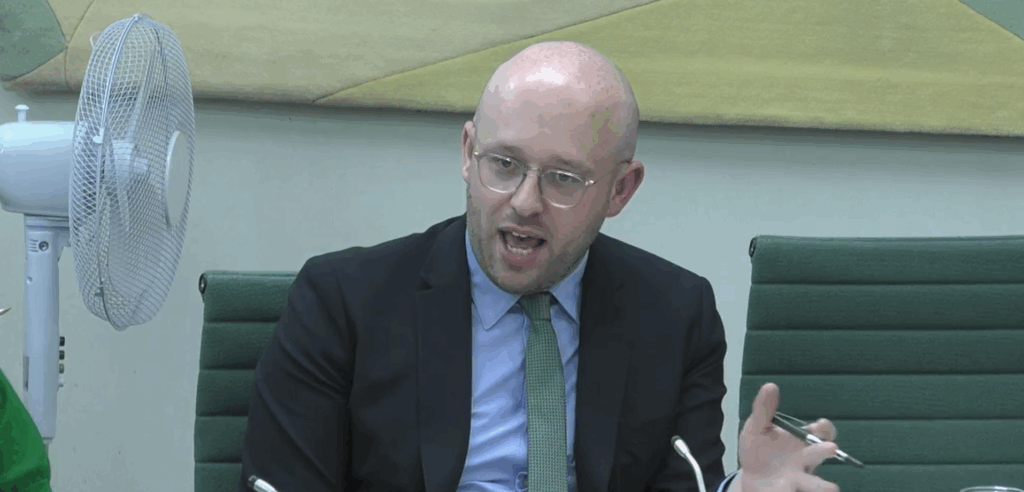
Lloyd Hatton MP raised another point also highlighted in TaxWatch’s evidence: the corporate criminal offence for ‘failure to prevent’ employees from facilitating tax evasion, introduced in 2017 as part of the government’s response to the ‘Swiss Leaks’ scandal about large international banks. Nearly ten years on, there has so far been only one business charged, in August 2025. This is welcome, but the business is an SME accountancy firm in Stockport, not the kinds of large banks or offshore law firms that the government talked about when the measures were introduced.
In response, HMRC officials said they had looked at over 125 potential instances where businesses may have facilitated tax evasion, but in each case believed that it didn’t “meet the bar”. They also told MPs there are “43 ongoing investigations” into the corporate criminal offence – though once again declined to say how many of these involved large businesses, if any.
(The way that HMRC described these cases to MPs yesterday was also an inflation from the information published by HMRC earlier this year, which stated that there are only 11 “live investigations”, with the balance of 32 cases being simply “opportunities currently under review”).
Finally, Lloyd Hatton MP also noted that HMRC has never applied the penalty against enablers of offshore tax evasion, nine years since this specific penalty regime was introduced. HMRC officials didn’t respond to this point at all.
Can’t cook, won’t cook?
MPs and the public are left inevitably with the feeling that HMRC either can’t use the available powers and penalties against large businesses and offshore evasion enablers, or won’t use them – and we’re still not being told which.
More worryingly still, it’s not clear that HMRC itself knows. In March, an HMRC publication confidently stated that “there are a number of large businesses under civil or criminal investigation with HMRC’s Fraud Investigation Service”. Last month, however, TaxWatch revealed that HMRC was unable to actually tell us how many such investigations there are.
MPs repeated this simple question again yesterday: could HMRC tell them how many civil investigations into tax fraud by large businesses it has completed?
The response from HMRC’s Nicole Newbury was stark:
“I’m afraid we can’t….we’ve developed an expert counter-fraud capability within [the] Large Business [Directorate]…[which] works closely with our Fraud Investigation Service….But as cases move across into our Fraud Investigation Service their case management system isn’t capable of being cut by customer segment”.
[Lloyd Hatton MP] “Just to be clear: that information does not exist?”
[Nicole Newbury, HMRC]: No.
HMRC officials promised the Committee that they would be able to answer questions like this in the next 12 months as part of HMRC’s data and digital transformation.
Nonetheless given that there are only 2,000 large businesses, the fact that HMRC has never sought to count how many are being investigated or prosecuted for tax fraud or other serious non-compliance (if any) suggests a remarkable lack of curiosity – all while confidently telling the NAO and Parliament that “large businesses are generally compliant and cases of egregious behaviour are rare”.
Disappearing tax avoidance?
The undercurrent of all of this questioning is a discrepancy between what we can actually know and see about the tax affairs of corporate giants, and what we’re asked to take on trust. It’s this gap that has in the past fueled suspicions that big businesses are getting “sweetheart deals” and special treatment. The NAO looked confidentially at real investigations and insists this isn’t the case. HMRC assures us constantly that large businesses are their most compliant taxpayer group. Yet there’s remarkably little hard evidence outside of investigations like ours, or rare cases litigated at tribunal, about how these corporate giants are really conducting their tax affairs, and whether they’re paying the right tax.
Asked again yesterday for such ‘proof points’, HMRC officials relied on their own ‘tax gap’ estimates. Only 5 percent of the £5.8 billion large business tax gap, MPs were told, is now “avoidance”: suggesting that ‘large business tax avoidance’ costs only around £300 million a year, a big decrease compared to twenty years ago. (HMRC doesn’t usually publish these behavioural splits for different taxpayer groups, so it’s interesting to see they exist).
The key question, of course, is what HMRC classifies as “avoidance”. HMRC’s own statistics suggest that for large businesses they may now be excluding from this category the kinds of behaviours they themselves classify as “contrived and artificial measures by multinationals to avoid paying tax“, or even contraventions of specific targeted anti-avoidance rules (TAARs).
Take, for instance, the amounts of diverted profits tax (DPT) that TaxWatch’s recent investigation shows HMRC has charged just one company — Glencore Plc — for alleged “contrived and artificial” profit diversion. We don’t have figures for each year going back to the start of the dispute, but we do know that Glencore have received DPT assessments totaling around £1 billion, covering tax years 2015 to 2022. Since DPT is charged at 31 percent, that suggests HMRC considers that around £3.2 billion of Glencore’s profits were artificially diverted in these years, which otherwise (at the 19 percent corporation tax rate) would have generated around £615 million of corporation tax receipts over those eight years.
The total large business corporation tax gap in those eight years, according to HMRC’s estimates, was £9.3 billion. If — as HMRC told MPs yesterday — only 5 percent of that gap is due to avoidance, that’s around £470 million. This is less than the amount of tax that HMRC’s diverted profits tax assessments suggest they believe just one large business avoided through diverted profits over that time.
Of course, this is a back-of-an-envelope estimate, and there are all sorts of aspects of tax gap statistics that make the company-specific figure incommensurate with the tax gap. Nonetheless the Glencore case alone suggests that HMRC considers that some large businesses’ profit diversion have been depriving the fisc of more tax every year than HMRC’s tax gap statistics say is lost through large business “avoidance”. In Glencore’s case, the alleged tax loss that doesn’t seem to count in HMRC’s tax avoidance estimates is generated by tax behaviour that HMRC has explicitly argued in court contravenes “diverted profits” legislation; “unallowable purposes” legislation that requires the purpose of the transaction to be “a tax avoidance purpose”; and several specific “anti-avoidance” measures.
The debate about “what is tax avoidance” over the last twenty years has taken up a lot of space, and not created much clarity. No-one wants to revisit it.
Nonetheless HMRC itself uses this language, and claims that large business tax avoidance is now extremely rare. If this claim is indeed based on not classifying big businesses’ contraventions of “anti-avoidance” legislation as “tax avoidance” — something TaxWatch will be seeking to confirm or deny in its State of Tax Administration Report 2026 — then this is doing really serious and arguably misleading violence to the basic terminology that HMRC uses to inform the public and MPs.
Large business tax compliance is, these days, an unfashionable area of the tax gap. But fairness and huge amounts of revenue are at stake. We’ll continue to scrutinise it, and we applaud the Public Accounts Committee for doing so too.