There are different reasons for not paying due tax: from genuine mistakes to criminal fraud.
At the more serious end of the scale is evading tax liabilities on purpose. Deliberately providing HMRC with inaccurate or false information. Deliberately failing to tell them about income. Charging customers VAT when you aren’t in fact VAT-registered, then keeping the money.
Since 2009, HMRC has had the power to name taxpayers penalised for this kind of ‘deliberate tax default’ where the tax loss is greater than £25,000. The latest list dropped on Thursday.
None of those on the list are household names. Some are obviously small: barbers, joiners, convenience stores. Those owing the most tax, though, include large property developers, film production companies, a firm that received over £50 million of Covid PPE contracts.
And, as highlighted in the Daily Mirror last week: while the nation’s overall tax gap is going down, the amount of tax underpaid by these ‘deliberate tax defaulters’ is going up. During 2025 HMRC named 583 companies and individuals, charged a total of £533 million in additional tax and penalties. This is more than double the amount (£209 million) owed by those named in 2024.
Of course, there are lots of reasons why this figure might fluctuate. Each entry on the list covers unpaid tax and penalties over several years. Resolving large or longstanding cases may skew the figures in a particular year. Some settlements with HMRC may agree not to name deliberate defaulters at all. Rising compliance yield could also just reflect more successful compliance efforts by HMRC.
Nonetheless the figure has increased every year since 2022. This means that if detection is getting better, it hasn’t yet reached diminishing returns. That in turn suggests there’s still a lot of deliberate tax evasion out there.
HMRC itself agrees. Its estimate of the annual small business ‘tax gap’ has increased massively since 2018, from £11.6 billion to £28 billion. TaxWatch has raised questions about this sky- rocketing estimate. But if the figures are even half right, small businesses’ unpaid tax represents one of the biggest drains on the public purse. And although much of this may be due to error and failure to take due care, the scale of the deliberate defaulters list makes it clear that a substantial chunk is purposeful evasion.
That should worry all sides of the political spectrum. Even if you think that giant multinationals are tax villains, there’s nothing progressive – or conservative – about defending smaller businesses which deliberately hide their taxable income. As TaxWatch pointed out to the Mirror:
Half a billion pounds is roughly the cost of a GP appointment for every child in the UK.
Especially given that ‘small business’ can mean a company with up to £15 million of turnover. A ‘small’ business is quite often owned by people in the top 1% of income and wealth. When the deliberate tax defaulters list includes a ‘property developer’ who is the son of a foreign country’s Prime Minister, listed at an address in Park Lane, we’re clearly not just talking about ‘White Van Man’.
This week even the first report from new Green-aligned think tank ‘Verdant’ highlighted the small business tax gap as a potential area for a Green ‘DOGE’ -style agency to find savings across UK government.
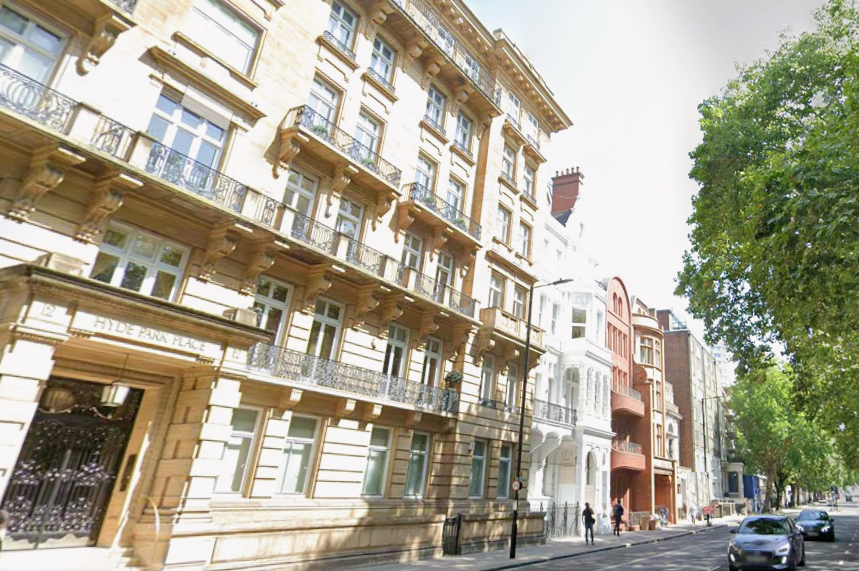
“Not just White Van Man”: one of the largest deliberate tax defaulters named by HMRC during 2025 is listed at an address next to Hyde Park in central London
Verdant recommended better customer tools to help willing small businesses get their taxes right. That’s a good idea. But for those who deliberately don’t pay their taxes, there are arguably two missing pieces.
First, it’s likely that a large number of those on the deliberate tax defaulters list used professional tax advisers or accountants to do their taxes. Around half of the 4,478 business and individuals named since 2015 were large enough to run up six-figure sums of unpaid taxes and penalties. 260 of them owed over a million pounds. At that scale, it seems improbable that they were all filing their own tax returns.
These businesses’ deliberate income concealment, false information or unauthorised VAT invoices might have been hidden from their tax agents as well as HMRC. But it seems hard to believe that that happened in all cases.
Yet the arsenal of measures against tax professionals that facilitate tax evasion or dishonesty remains largely unused. According to TaxWatch figures highlighted in the Mirror this week, HMRC has fined fewer than five tax advisers and agents for dishonesty in the last five years, and to our knowledge has never used its powers to name any of them. A corporate criminal offence of a firm failing to stop its employees facilitating tax evasion entered the statute book in 2017, but didn’t see the first charge brought until August 2025 – a case which won’t come to trial before 2027.
Moreover, the sector with by far the largest tax liabilities on the deliberate defaulters list are payroll or employment companies: firms whose business, in large part, is actually to do other people’s taxes. Of the ten deliberate tax defaulters with the largest tax liabilities on the 2025 list, four are payroll firms. This includes the top two, which respectively owed HMRC £87 million and £36 million in unpaid taxes. Two of the top ten are part of a larger group of related payroll businesses, four of which HMRC named as deliberate tax defaulters in 2025, and collectively owed over £100 million in unpaid taxes (not including penalties).
Some changes are afoot. New measures in Finance Act 2026 should enable HMRC to penalise tax advisers that deliberately cause a tax loss contrary to law, without the disabling administrative steps and appeal points of the previous ‘dishonest tax agents regime’. (The professional bodies continue to oppose the new measures, with the Institute for Chartered Accountants of England and Wales calling penalties against such behaviour an ‘existential threat’ to the tax profession).
Changes in the 2026 Finance Act have also made payroll companies – and potentially also their clients – jointly liable for unpaid employment taxes of contractors they employ via ‘umbrella companies’. This could mean that HMRC gets its money more easily. But without more serious sanction, payroll and umbrella firms failing to pay contractors’ due taxes can in many cases still just file for insolvency under their tax debts, walk away and ‘phoenix’ into a new company, starting again with nothing more than a ‘deliberate defaulter’ listing that disappears from HMRC’s website after 12 months.
That’s why the second piece of the puzzle is equally important. Hitting greater numbers of tax evaders with civil penalties, however hefty, doesn’t seem to be slowing down their rise. As TaxWatch has been underlining for years, it’s time HMRC got serious about prosecuting tax evaders that cross the line into tax fraud – particularly those responsible for others’ tax delinquency through schemes, scams and their professional functions.
Prosecutions are expensive and time-consuming, especially with our backlogged court system. But there were more people prosecuted last year for fishing offences than for tax fraud. Earlier this month the chair of the All-Party Parliamentary Group on Responsible Tax told Parliament that
Aggressive tax avoidance & tax evasion have become decriminalised, not through any change in the law but through something far more corrosive: lack of enforcement.
Judicious prosecutions of more of the worst offenders could change the calculus for others: something that naming and shaming doesn’t seem to be doing.